“it is easy to forgive a small child afraid of the dark, but not a full-grown man afraid of the light.”

Showing posts with label mosquitoes. Show all posts

Wednesday, September 2, 2009

DENGUE FEVER

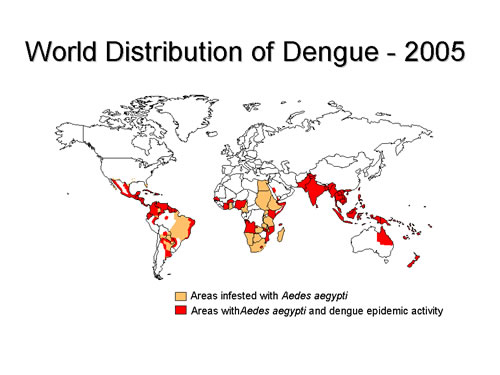
Condition: Dengue fever, an infection that causes flu-like symptoms in its victims, is spread by the bite of the Aedes mosquito. There are an estimated 50 million infections each year. It is most
prevalent in sub-tropical regions, especially in South-east Asia and the Western Pacific. Dengue haemorrhagic fever is a more dangerous, often fatal form of dengue fever. In some Asian countries, dengue haemorrhagic fever is the leading cause of serious illness and death
in children.
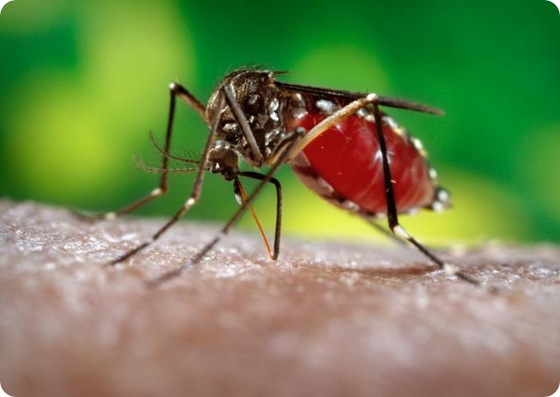
Causes: Dengue fever is spread by the bite of the Aedes mosquito. The mosquito becomes infected with the virus by biting an infected human. Once infected, the mosquito is capable of transmitting the virus to humans for the rest of its life. It may also pass the virus down to it's offspring. The virus cannot be spread form human to human.
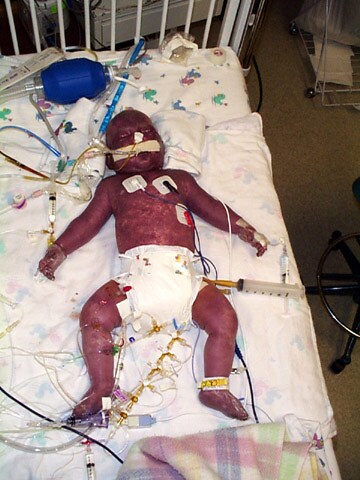
Effects: Dengue fever causes flu-like symptoms in its victims. High fever, headaches, pain behind the eyes, muscle and joint pains, stomach pains, vomiting and rash are common. Symptoms usually subside within one week. However, symptoms of dengue haemorrhagic fever are more severe and can lead to liver enlargement and circulatory failure. Without treatment, victims can die within 24 hours.
Treatment: Since dengue fever is a virus, there is no specific treatment. No drug can cure it, but symptoms can be managed. In the case of dengue haemorrhagic fever, hospitalization is imperative so that doctors may maintain the patient's circulating fluid volume. Since treatment of the virus is so difficult, prevention is the most useful weapon. People in endemic regions can use preventative measures such as using mosquito nets and avoiding standing water (mosquito breeding ground). In addition, chemical vector control methods have proved effective.
Recent News about Dengue Fever:
Experts Seek Ways to Fight Dengue Fever in Asia
Scientific Global Symposium on Dengue Fever Held in Philippines
Dengue Fever Cases Rise to 24,857 in Sri Lanka
First Human Trials for Recombinant Dengue Fever Vaccine

If YOU want to do something about Dengue Fever, YOU can support these organizations:
International Vaccine Institute (Pediatric Dengue Vaccine Initiative)

Thursday, August 27, 2009

ELEPHANTIASIS

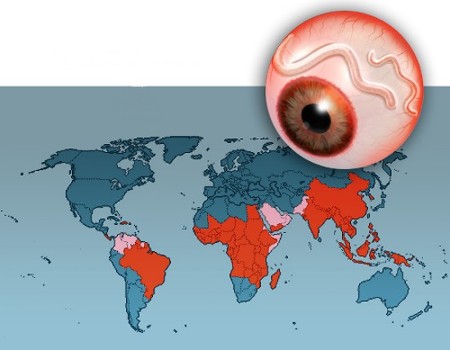
Condition: Elephantiasis, or lymphatic filariasis, is a disfiguring condition caused by microscopic, parasitic worms. Currently, there are 120 million people infected, and one-third of those people are seriously incapacitated by it. It is most prevalent in Africa and Southeast Asia, especially in India. It is more common in men than in women, and in endemic communities, up to 50% of men and 10% of women may be affected.
Causes: The parasites are spread from human to human by mosquito bites. It is very common in poor, densely populated areas. Once inside the body, the worms and their offspring clog the lymphatic vessels causing an immune response and extreme swelling in the victim.
Effects: The effects of elephantiasis are extreme. The most visible effect is acute swelling primarily in the lower extremities, especially the legs, feet, and genitals. Swelling can also occur in the torso, arms, breasts, and even the face. In addition to the visible swelling, elephantiasis can damage internal organs as well. In many communities, there is a social stigma against those infected, and they often suffer from psychological and emotional issues.
Treatment: The treatment for elephantiasis is not clearly defined. However, a combination of drugs, which varies depending on the region, along with rigorous cleaning of the affected area has proved effective. Two drug companies, SmithKline Beecham and Merck, have collaborated with the World Health Organization, and have agreed to donate doses of their respective drugs, albendazole and ivermectin, until the disease is eradicated. Several other organizations have also joined the fight, and it is hoped that the disease will be completely eradicated by 2020.
Recent News about Elephantiasis:
New DNA Coding to Track Mosquitoes
Campaign to End Elephantiasis in Fiji Continues

If YOU want to do something about Elephantiasis, YOU can support these organizations:
The Global Alliance to Eliminate Lymphatic Filariasis

The Carter Center

Wednesday, August 5, 2009

RIVER BLINDNESS


young children leading blind adults.

Disease: Onchocerciasis, more commonly known as River Blindness, is one of the leading causes of preventable blindness in the world. It is an infection caused by a parasitic worm, and it is spread through the bite of the black fly. There are currently 37 million people infected with the parasite, and 99% of those people live in sub-Saharan Africa.
How it's spread: As the black fly (the vector) bites an infected person, the worms travel from the infected person to the body of the fly. The black fly then bites another person, and the worms travel from the fly to the second person. A person must be bitten more than once, however, to contract the infection. Once inside the body, the worms mate and create millions of offspring, which invade various parts of the body, including the eyes. As the offspring die off, the body has an inflammatory response. On the skin, this response causes severe rashes, and in the eyes, it causes blindness.
Effects: The social and economic effects of this infection are tremendous. Adults are unable to work because of visual impairment, and children are unable to go to school because they must help their parents. The cycle of poor education, poverty, and bad health continues, and entire communities ultimately suffer.
Cure: One dose per year of a drug called Ivermectin prevents the worms from reproducing in the body, and thus prevents the onset of symptoms and further transmission. The drug company Merck currently donates doses of the drug in many countries. To date, they have donated over 600 million doses. Although the treatment is so simple and economical, millions of people continue to suffer.
Recent news about River Blindness:
River Blindness Can Be Eradicated
River Blindness Can Be Stopped by Drugs

If YOU want to help do something about River Blindness, YOU can support these organizations:
The Carter Center
Helen Keller International (be sure to type in “Onchocerciasis” in the "Program to Support" field)
Living Water International